Warrigal Greens
Tetragonia tetragonoides
Also known as: Warrigal Greens, New Zealand Spinach, Botany Bay Spinach, Sea Spinach, Cook's Cabbage
'Tetragonia' refers to the four-angled (tetragonal) fruit of the plant. 'Tetragonoides' means 'resembling Tetragonia'. 'Warrigal' is an Aboriginal Australian word used to describe things that are wild or native. 'Cook's Cabbage' commemorates Captain James Cook's use of this plant as an antiscorbutic vegetable for his crew. One of Australia's best-known and most historically significant edible plants, Warrigal greens is a sprawling, fleshy-leafed perennial native to coastal Australia and New Zealand. It grows prolifically in coastal dunes, beaches, rocky headlands, and disturbed coastal ground, often forming dense mats. It is one of the few Australian plants to achieve broad international horticultural use – introduced to European vegetable gardens in the 18th century and now cultivated worldwide as a spinach substitute.
When to Forage
Year-round; most lush in spring and summer.
Cautions
Warrigal greens contain high levels of oxalic acid – the same compound found in spinach and rhubarb. Raw leaves should not be eaten in large quantities. Always blanch in boiling water for 1–2 minutes (or boil briefly), then discard the water before eating. This removes the majority of oxalates. Those with kidney stones, gout, or rheumatoid arthritis should limit consumption. Those on blood thinners should monitor vitamin K intake from this plant.
Nutrition
After blanching: rich in vitamins A (beta-carotene), C, and K; a good source of iron, calcium, and magnesium; and dietary fibre. Similar nutritional profile to spinach. Contains antioxidant flavonoids.
How to Identify
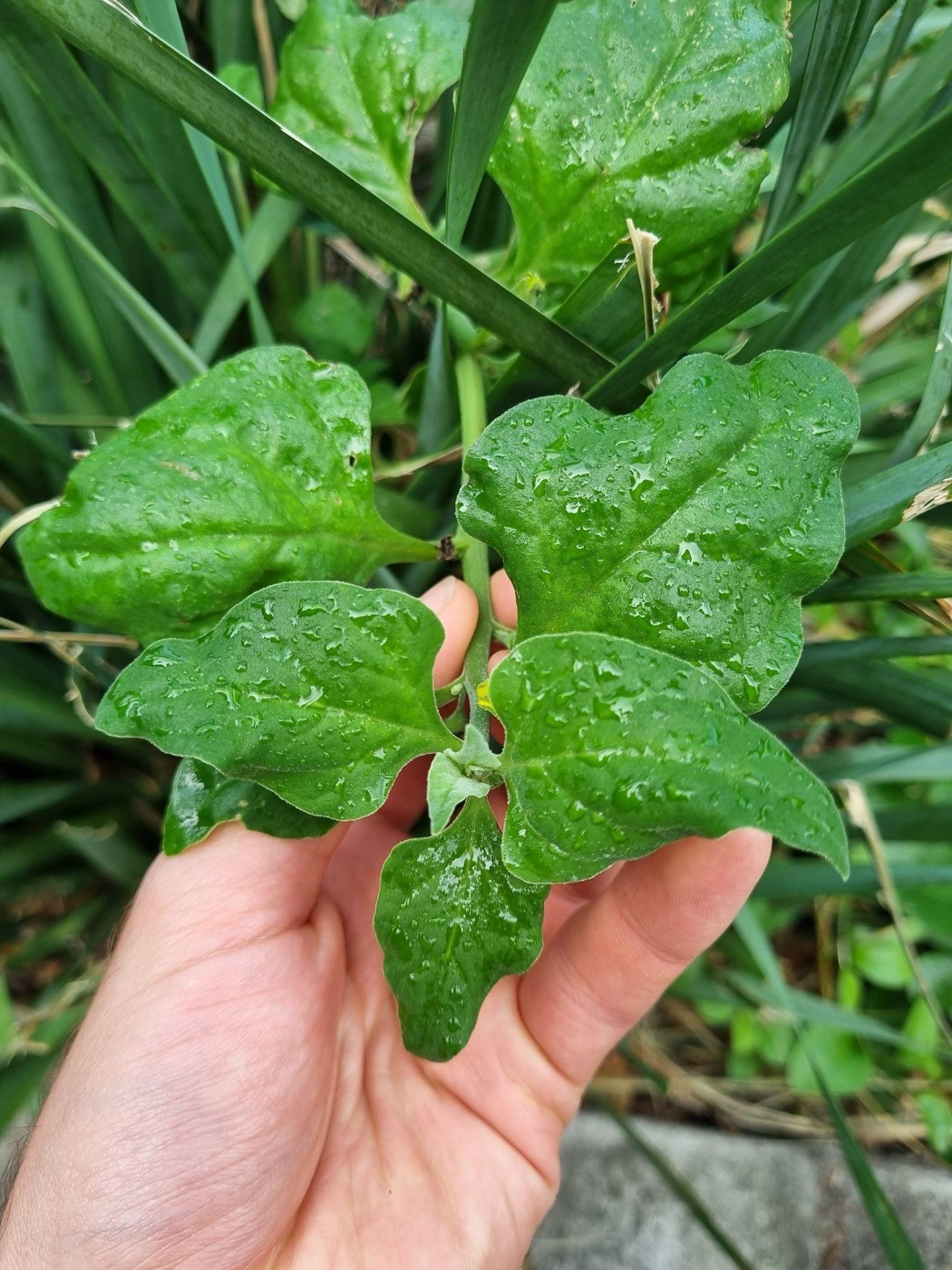
- Triangular to diamond-shaped, fleshy, bright green leaves covered in tiny, glistening, water-filled papillae (crystalline bladder cells) that give the leaf a sparkling, dewy appearance.
- Sprawling, succulent stems rooting at nodes; forms extensive ground-covering mats.
- Small yellow-green flowers with four sepals; no obvious petals.
- Hard, angular, four-ridged fruits (the four wings/angles give the genus its name).
- Coastal habitat: sand dunes, clifftops, beaches.
Lookalikes
Similarly succulent, sprawling coastal plants with papillae-covered leaves. Distinguished by much thicker, cylindrical, three-angled leaves and large, daisy-like pink or purple flowers. Pigface is edible (see note if included); does not closely resemble Warrigal greens on careful inspection.
How to Forage
Pick young, tender leaf tips using fingers or scissors. Harvest from the freshest, most vigorous growth. Always blanch before eating – place in rapidly boiling water for 1–2 minutes, drain, and rinse in cold water before using in any recipe. Do not eat raw in quantity.
Recipe — Warrigal Greens and Cashew Cream Pasta
Ingredients: 3 large handfuls Warrigal greens (blanched, drained, and chopped); 400 g pasta (pappardelle or fettuccine); 1/2 cup raw cashews (soaked 1 hour, drained); 1/2 cup water; 2 tbsp nutritional yeast; 2 cloves garlic; 3 tbsp olive oil; zest of 1 lemon; salt, pepper, chilli flakes. Method: Blanch the Warrigal greens in boiling water for 2 minutes, then drain, refresh in cold water, squeeze dry, and roughly chop. Blend the soaked cashews, water, nutritional yeast, and a pinch of salt until smooth. Cook the pasta in salted boiling water until al dente, reserving 1 cup of pasta water. In a large pan, gently warm the olive oil and garlic, add the Warrigal greens, and toss for 2 minutes. Add the cooked pasta, cashew cream, lemon zest, and a splash of pasta water, and toss to combine into a creamy sauce. Serve topped with extra nutritional yeast and chilli flakes.
Want more?
Join our newsletter for more recipes, foraging guides and upcoming events.