Scurvy Weed
Commelina cyanea
Also known as: Scurvy Weed, Native Wandering Jew, Scurvy Grass (note: different from coastal Cochlearia officinalis)
'Commelina' honours the Dutch botanists Jan and Kaspar Commelin (uncle and nephew), represented in the flower by two conspicuous blue petals (they published extensively) and one tiny, insignificant third petal (a third Commelin nephew who contributed little to science). 'Cyanea' is Greek for 'blue'. 'Scurvy weed' reflects the plant's traditional use as an emergency source of vitamin C. Commelina cyanea is a sprawling, succulent-stemmed native herb found in moist, shaded coastal forests, rainforest margins, creek lines, and disturbed coastal ground in eastern Australia. The bright, clear-blue flowers are unmistakable. The fleshy stems root at nodes as the plant creeps along the ground or scrambles over other vegetation. It has been used as a survival green by both Aboriginal Australians and European settlers as a source of vitamin C.
When to Forage
Year-round in warm climates; flowers particularly in spring and summer.
Cautions
Generally safe as a food plant in the amounts likely to be foraged. Note: do not confuse with introduced Wandering Trad (Tradescantia spp.), which has a similar form but is not considered edible and may cause contact dermatitis. The leaves of Commelina cyanea contain some calcium oxalate crystals – cooking reduces this. Avoid large raw quantities.
Nutrition
A significant source of vitamin C (as the name implies), with meaningful amounts relative to body weight when consumed. Also contains beta-carotene, potassium, and mucilaginous compounds. The plant's vitamin C content made it medically significant in early colonial Australia as an antiscorbutic (scurvy treatment).
How to Identify
- Sprawling, semi-succulent herb with fleshy, jointed stems that root readily at nodes.
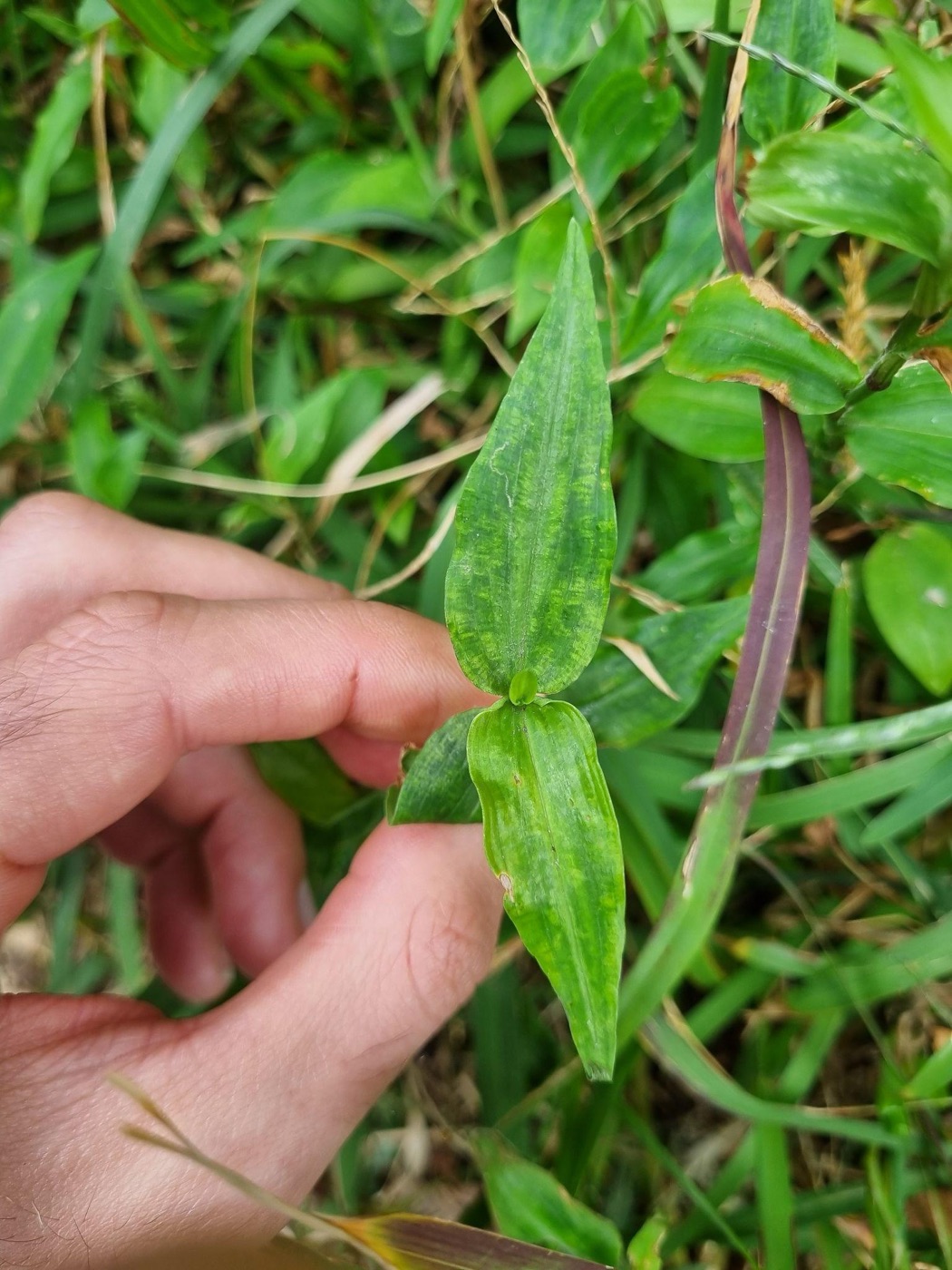
- Leaves are lance- to oval-shaped, bright green, shiny, with a papery sheath clasping the stem at each node.
- Flowers are the definitive identification feature: vivid, clear blue, with three petals – two large, prominent blue petals above and one small, reduced petal below. Yellow stamens create a striking contrast.
- Flowers are ephemeral, opening for only a few hours in the morning.
Lookalikes
A similar creeping, succulent-stemmed form but with white flowers (not blue) and oval, waxy leaves. A major invasive weed – contact with the plant can cause itchy dermatitis in sensitive individuals. Do not eat.
A related genus with similar lilac or pale blue flowers, typically smaller; generally edible in small amounts.
How to Forage
Harvest young leaves and stem tips with fingers. Can be eaten raw as a trail snack or light addition to salads; cooking reduces the oxalate content and improves texture. The plant is most tender in shaded, moist positions. Wash thoroughly.
Recipe — Scurvy Weed and Lemon Soup
Ingredients: 4 large handfuls scurvy weed leaves and stem tips; 1 large leek, sliced; 2 potatoes, peeled and diced; 1 litre vegetable stock; 2 tbsp olive oil; juice of 1 lemon; salt and pepper. Method: Sauté the leek in olive oil until softened, about 5 minutes. Add the potato and stock and simmer for 15 minutes until the potato is tender. Add the scurvy weed and cook for 3 minutes. Blend until smooth, then stir in the lemon juice and season. Serve hot with bread – the lemon preserves and enhances the vitamin C content.
Want more?
Join our newsletter for more recipes, foraging guides and upcoming events.