Prickly Lettuce
Lactuca serriola
Also known as: Prickly Lettuce, Wild Lettuce, Compass Plant
'Lactuca' comes from the Latin 'lac' (milk), referring to the milky latex the plant exudes when cut – the same origin as the common name for the cultivated vegetable. 'Serriola' is a corruption of an old Italian vernacular name. 'Compass plant' refers to the remarkable habit of the leaves orienting themselves north-south (edge-on to the midday sun) in open sunny conditions – a feature unique to this species among the wild lettuces and a key identification aid. Prickly lettuce is the ancestral parent of cultivated garden lettuce (Lactuca sativa) and the wild lettuce species most commonly encountered by foragers across Australia. It grows as a tall annual or biennial in disturbed ground, roadsides, gardens, coastal dunes, and waste areas. Young plants are edible as a cooked green. This is the species intended when foraging guides refer to 'wild lettuce' as a food plant – do not substitute Lactuca virosa (opium lettuce), which carries a far stronger sedative load.
When to Forage
Best as a young basal rosette in autumn and spring. Flowers in summer; harvest before bolting for the most tender, least bitter leaves.
Cautions
The milky latex (lactucarium) contains mildly sedative sesquiterpene lactones – in large amounts, consuming raw wild lettuce or its concentrated sap can cause dizziness, nausea, and drowsiness. Culinary use of young cooked leaves in normal food quantities is safe. Do not eat large quantities raw. Those who are pregnant, or on sedatives or medications affecting the central nervous system, should avoid medicinal use.
Nutrition
Contains vitamins A and C; calcium, potassium, and iron. The sesquiterpene lactones (lactucin, lactucopicrin) have documented anti-inflammatory and mild analgesic properties. The plant is more medicinally interesting than nutritionally dense, but young leaves make a reasonable cooked green after blanching to remove bitterness and reduce lactone concentration.
How to Identify
- Upright, tall plant (can reach 150 cm when flowering), producing a basal rosette in the first year before bolting. Stem is slender to moderately stout and green – rarely purple-tinged, unlike opium lettuce.
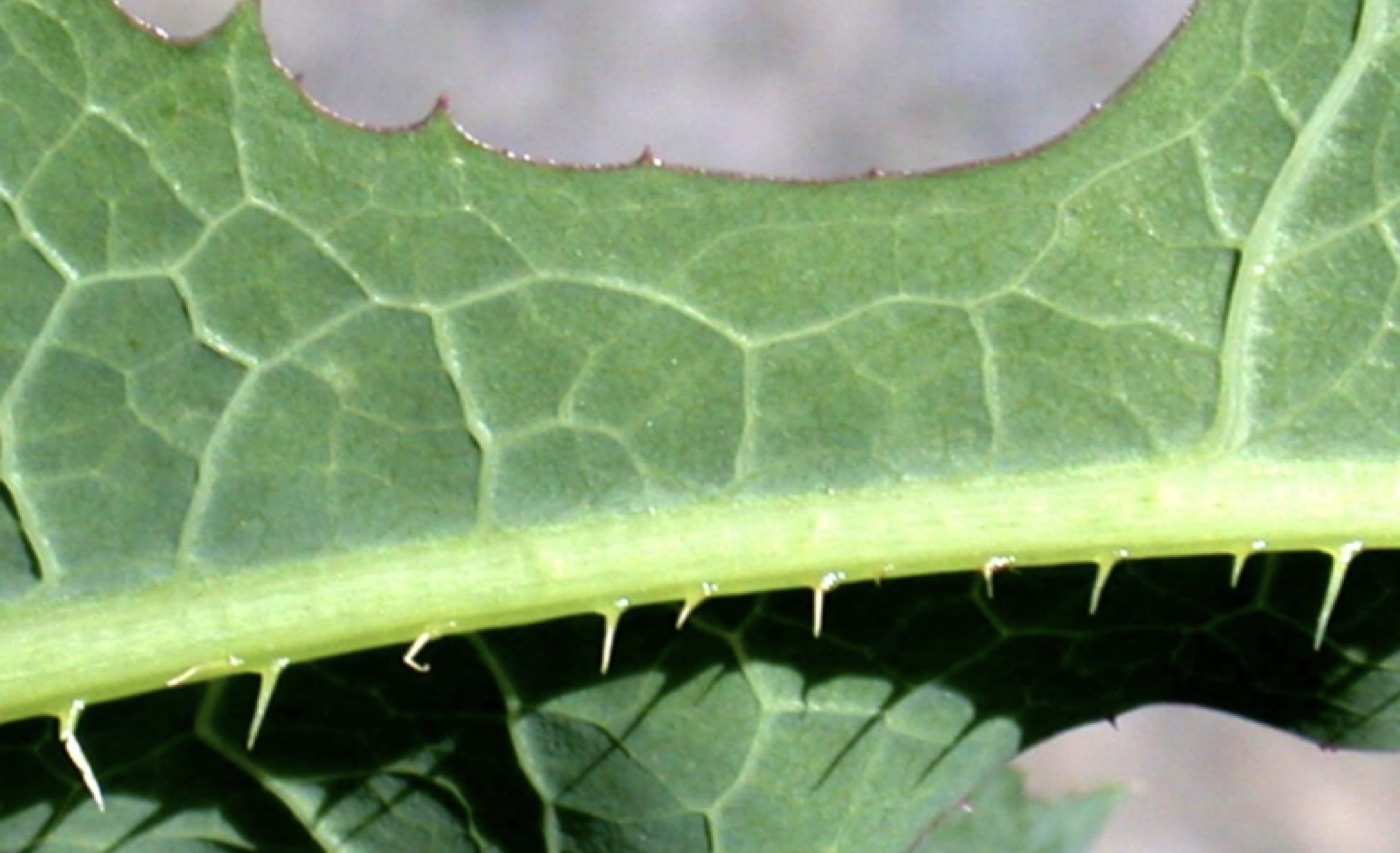
- Leaves are deeply lobed or pinnately cut, with prominent midribs. The underside of the midrib bears a row of stiff, whitish prickles – a key identification feature. Leaf margins are also irregularly toothed and spiny.
- Compass-plant behaviour: in open sunny conditions the flat faces of the leaves orient north and south (edge-on to the midday sun), reducing heat load. This behaviour is diagnostic for L. serriola and absent in L. virosa – always check this in the field before harvesting.
- All parts exude white milky latex when cut. The latex has a mild, slightly bitter odour – not strongly unpleasant. If the smell is heavy, acrid, or narcotic, you are looking at opium lettuce; do not harvest.
- Flower heads small, pale yellow, numerous, borne in a large branching terminal panicle. All florets are ray florets. Seeds have a white feathery pappus on a slender beak.
Lookalikes
Larger and stouter, with leaves that are broader and barely lobed; the stem is often purple-blotched, and the cut latex has a markedly stronger and more unpleasant smell. Most importantly, it does not show the compass-leaf orientation. Always verify compass behaviour in open sunlight before harvesting.
Similar milky sap, lobed leaves, and yellow flowers. Sow thistle leaves are softer and less deeply cut, leaf prickles on the margin are gentler, and leaves clasp the stem with rounded auricles. Both are edible and safe.
How to Forage
Harvest young basal leaves in autumn or spring before the plant bolts. First confirm compass-leaf orientation in open sunlight to rule out opium lettuce. Cook by blanching in boiling water for 2 minutes and discard the water – this removes bitterness and reduces the sedative compound concentration. Best used as a cooked green, not raw in large quantities. Tender inner leaves of young rosettes can be eaten sparingly in salads.
Recipe — Wild Lettuce, Potato & White Bean Gratin
Ingredients: 2 large handfuls young wild lettuce leaves (blanched, squeezed dry, roughly chopped); 500 g waxy potatoes, thinly sliced (2–3 mm); 1 can white beans (cannellini), drained and rinsed; 1 onion, thinly sliced; 3 cloves garlic, minced; 200 ml oat cream or full-fat coconut cream; 100 ml vegetable stock; 2 tbsp olive oil; 2 tbsp nutritional yeast; salt, pepper, and a generous grating of nutmeg; optional handful of breadcrumbs mixed with olive oil for topping. Method: Preheat oven to 180°C. Blanch wild lettuce 2 minutes; drain and chop. Sauté onion in olive oil until soft and golden, about 8 minutes; add garlic and cook 1 minute more. Whisk oat cream, stock, nutritional yeast, nutmeg, salt, and pepper together. Layer potatoes, onion mixture, white beans, and wild lettuce in a greased baking dish, overlapping each layer. Pour cream mixture evenly over. Scatter breadcrumbs over the top if using. Cover with foil; bake 40 minutes. Uncover and bake 20 minutes more until golden and bubbling. Rest 10 minutes before serving.
Want more?
Join our newsletter for more recipes, foraging guides and upcoming events.