Prostanthera (Native Mint Bush)
Prostanthera spp. (esp. P. rotundifolia, P. incisa, P. sieberi)
Also known as: Native Mint Bush, Round-leaf Mint Bush, Cut-leaf Mint Bush, Native Oregano, Native Thyme, Native Sage
'Prostanthera' comes from the Greek 'prostheke' (appendix) and 'anthera' (anther), referring to a spur-like appendage on the stamens. The genus contains around 100 species, all endemic to Australia, and belongs to the Lamiaceae (mint family), making it a true relative of culinary herbs such as mint, oregano, thyme, and sage. The common name 'mint bush' reflects the strongly aromatic foliage. Prostanthera species are aromatic shrubs or small trees found throughout Australia in coastal heathland, dry and wet sclerophyll forest, and sandstone ridges. Several species grow naturally along the coast and are widely planted in parks and gardens. The leaves are intensely fragrant when crushed, with a complex aroma that variously recalls oregano, thyme, camphor, and citrus depending on the species. The flowers, which appear in profuse sprays in spring, are typically purple, mauve, blue, or white, and are also edible. Aboriginal Australians traditionally used Prostanthera as a medicinal herb for treating headaches and colds, and the leaves were used aromatically. In contemporary Australian cuisine, Prostanthera leaves are used as a native substitute for oregano, thyme, or sage.
When to Forage
Leaves available year-round; flowers primarily in spring (September–November).
Cautions
Generally safe in culinary quantities as a herb or flavouring. The essential oils are potent – use sparingly, as the flavour can be overwhelmingly camphoraceous in large amounts. Not recommended for consumption in large medicinal doses during pregnancy. Some species contain significant levels of 1,8-cineole (eucalyptol) and other monoterpenes; these are safe in small culinary quantities but should not be consumed as concentrated essential oil. Some individuals may experience contact sensitivity to the aromatic oils. Several Prostanthera species are listed as vulnerable or endangered – always check conservation status before foraging wild specimens.
Nutrition
Nutritional data specific to Prostanthera is limited, but as aromatic Lamiaceae members, the leaves contain significant essential oils (monoterpenes and sesquiterpenes, including cineole, menthone, and various pinenes). These volatile compounds have documented antimicrobial, anti-inflammatory, and antioxidant properties. The leaves provide small amounts of vitamins and minerals typical of leafy herbs. Prostanthera is used as a flavouring herb rather than a bulk green, so its nutritional contribution is primarily through its bioactive aromatic compounds.
How to Identify
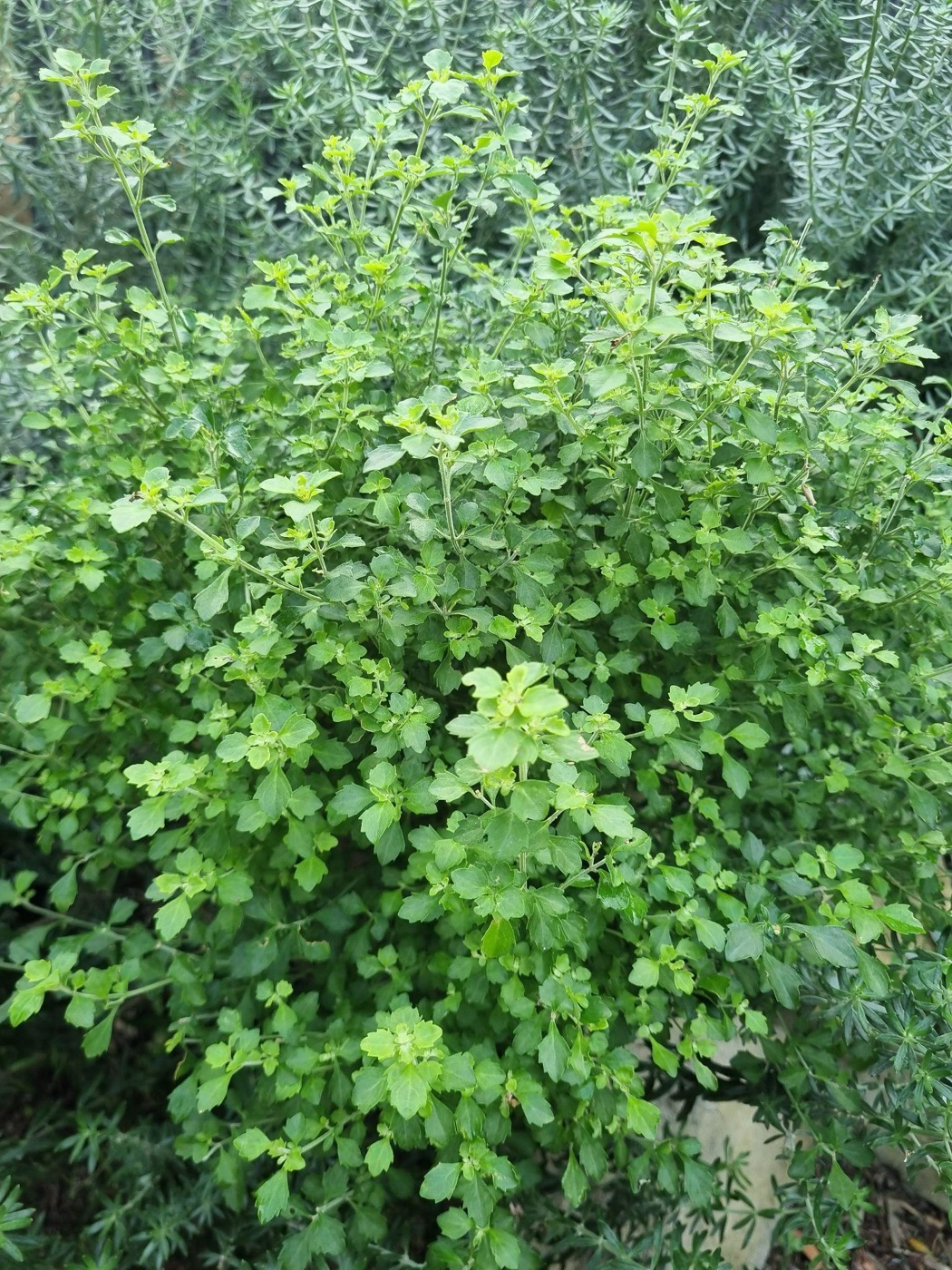
- Prostanthera rotundifolia (Round-leaf Mint Bush, Native Oregano): an upright, fast-growing shrub reaching up to 2 m tall and 1 m wide. Leaves are small, rounded to ovate, dark green, and intensely aromatic when crushed, with an earthy, oregano-like scent and a slightly citric tang. Flowers are masses of purple to mauve, tubular, two-lipped blooms in spring. Found in temperate coastal and forest areas of SA, NSW, Victoria, and Tasmania.
- Prostanthera incisa (Cut-leaf Mint Bush, Native Sage/Thyme): a similar shrub form but with finer, toothed (incised) leaves. The aroma is more camphoraceous, with a salty mouthfeel and intense herbal character. Purple flowers in spring. Prefers more sun than P. rotundifolia.
- Prostanthera sieberi: another coastal species with fragrant leaves, mauve flowers in spring and summer, and a dense, mound-shaped habit. Tolerant of frost and coastal conditions.
- Key identification features across species: square stems (typical of the Lamiaceae); opposite, aromatic leaves; two-lipped tubular flowers; and a spur-like appendage on the anthers, visible on close inspection.
Lookalikes
A closely related Lamiaceae genus with similar shrub form and small, aromatic, narrow leaves. Distinguished by leaves arranged in whorls of three or four (rather than opposite pairs) and generally paler, white or lilac flowers. Not traditionally used as food.
True mints are herbaceous (not woody shrubs) and have a more conventionally 'minty' aroma. Native river mint (M. australis) grows along waterways, not in dry heathland. No confusion risk; both genera are edible.
How to Forage
Harvest leaves and soft stem tips by plucking or pruning. A small amount goes a long way – the flavour is intense. Leaves may be used fresh or dried (chop and air-dry; note that aroma and flavour will fade over time). The flowers are also edible and make attractive, aromatic garnishes for salads and savoury dishes. Always confirm the species is not listed as threatened in your area before foraging wild plants. In gardens and parks, harvest only from plants you have permission to collect from, and do not strip entire branches.
Recipe — Prostanthera Tea
Ingredients: a handful of fresh (or a teaspoon of dried) Prostanthera leaves; 500 ml water (or whatever it takes to fill your teapot). Method: Add a handful of Prostanthera leaves to a teapot. Steep for five minutes, or until fragrant and the liquid has darkened slightly. Pour and drink.
Want more?
Join our newsletter for more recipes, foraging guides and upcoming events.