Gutweed
Ulva intestinalis (formerly Enteromorpha intestinalis)
Also known as: Gutweed, Sea Grass, Tubular Sea Lettuce
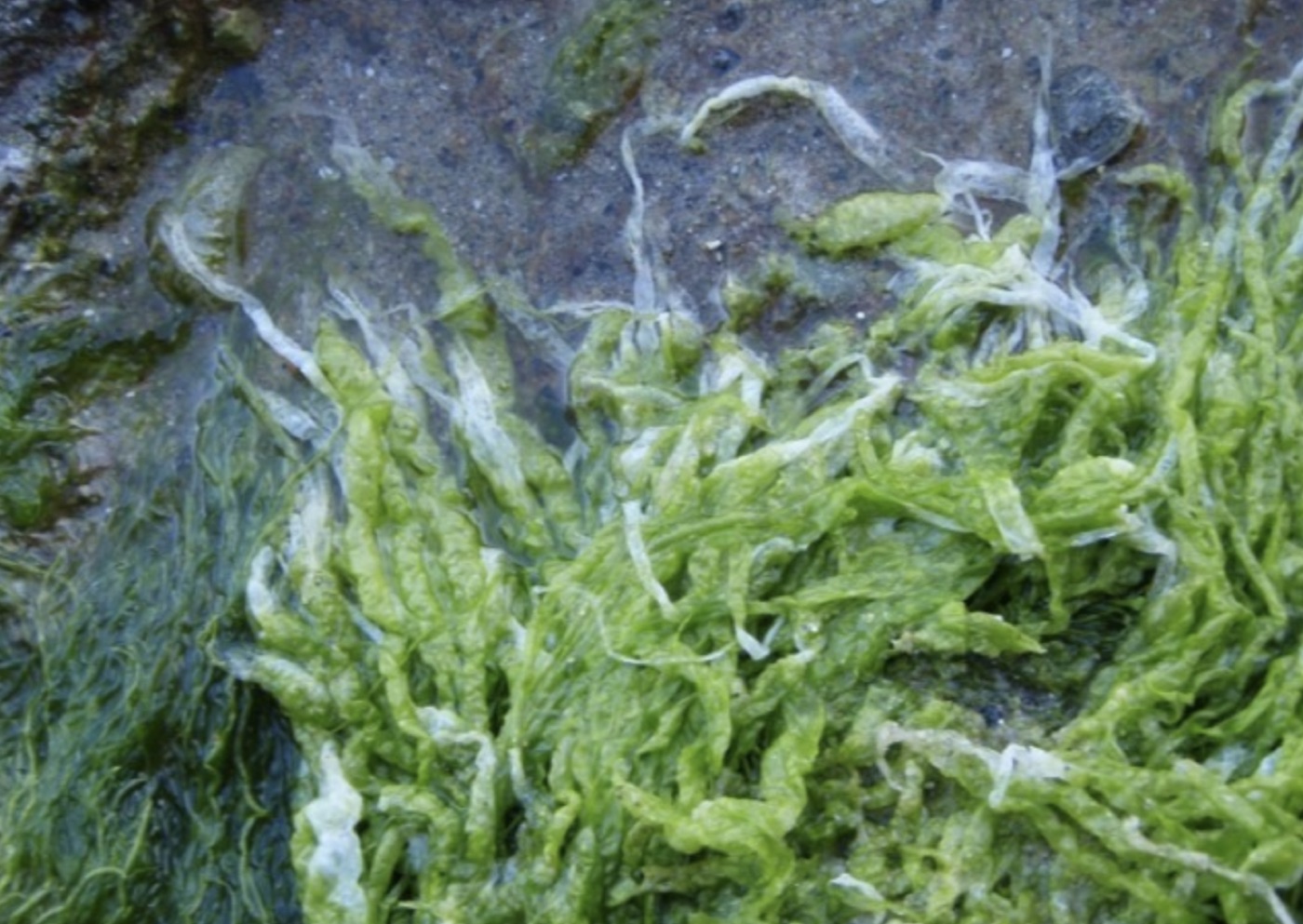
'Ulva' is Latin for 'sedge' or 'marsh plant'. 'Intestinalis' means 'intestine-like', perfectly describing the hollow, tubular fronds that can puff up with trapped air or oxygen from photosynthesis, giving an uncanny resemblance to intestinal loops. Gutweed is a bright green, tubular, hollow seaweed in the Ulvaceae family – a close relative of sea lettuce, but forming narrow tubes rather than flat sheets. It is found in intertidal rock pools, estuaries, sheltered bays, and areas of freshwater runoff where nutrients are plentiful. It is one of the most globally distributed marine algae and tolerates a wide range of salinities.
When to Forage
Year-round; most prolific in spring and early summer when nutrients are highest.
Cautions
Similar to sea lettuce: moderate iodine content – see the Iodine Note above. Blanch before eating to reduce iodine. Avoid harvesting from polluted estuaries, areas near stormwater drains, agricultural runoff, or areas posted with water quality warnings. Gutweed can accumulate nitrates in high-nutrient, polluted water.
Nutrition
Good source of protein (by dry weight), dietary fibre (particularly ulvan, a sulphated polysaccharide), vitamins C and B12 (small amounts), iron, calcium, magnesium, and iodine. Contains chlorophyll and carotenoids.
How to Identify
- Bright, vivid green colour – often the most vivid green in a rock pool.
- Tubular fronds: like hollow, inflated tubes or intestines, branched irregularly; may be puffed with air bubbles when exposed at low tide.
- Soft, slippery texture; flattens when removed from water.
- Often grows in dense, tangled mats in rock pools, estuaries, and sheltered shores.
Lookalikes
Flat, sheet-like fronds rather than tubes. Closely related and equally edible.
Other green filamentous algae may be confused with gutweed but are thinner, more filamentous, and less tubular. Not generally eaten, not significantly toxic.
How to Forage
Gather fresh, bright green fronds from clean rock pools or rocky shores at low tide. Avoid brackish or discoloured water or areas near drains. Rinse very thoroughly in fresh water several times to remove grit and sand. Blanch briefly before eating. Small amounts only.
Recipe — Gutweed and Cucumber Sunomono (Japanese-style Salad)
Ingredients: 2 handfuls fresh gutweed; 1 small cucumber, thinly sliced; 2 tbsp rice wine vinegar; 1 tsp sugar; 1 tsp soy sauce; 1/2 tsp sesame oil; toasted sesame seeds. Method: Blanch the gutweed in boiling water for 30 seconds, then drain and rinse in cold water, squeezing gently to remove excess moisture. Toss the cucumber slices with a pinch of salt, rest for 5 minutes, then gently squeeze out the liquid. Whisk together the rice wine vinegar, sugar, soy sauce, and sesame oil until the sugar dissolves. Combine the gutweed and cucumber in a bowl, pour the dressing over, and toss. Scatter sesame seeds on top and serve chilled.
Want more?
Join our newsletter for more recipes, foraging guides and upcoming events.