Flick Weed / Hairy Bittercress
Cardamine hirsuta
Also known as: Flick Weed, Hairy Bittercress, Shot Weed, Jumping Cress
'Cardamine' comes from the Greek 'kardamon' (a plant with heart-strengthening properties, related to cardamom). 'Hirsuta' means 'hairy.' The vivid common names – flick weed, shot weed, jumping cress – all refer to the plant's extraordinary seed dispersal mechanism: when the silique (seed pod) is touched or warmed by sun, it explosively opens and catapults its seeds up to one metre away. Flick weed is a small, fast-growing annual or winter annual of the mustard family (Brassicaceae), found throughout Australia in garden beds, pots, footpaths, disturbed ground, and shaded coastal areas. It is one of the most common garden weeds – and one of the most overlooked edibles. A miniature relative of cress and rocket, the leaves have a pleasant, mild watercress-peppery flavour and can be eaten straight from the garden without preparation. In Scandinavia, the United Kingdom, and parts of North America it is increasingly appreciated as a micro-green and garnish.
When to Forage
Mainly autumn through spring; may persist year-round in cool, shaded positions. Short-lived; several generations per year possible.
Cautions
Very safe. One of the mildest edibles in this guide. Contains glucosinolates common to all brassicas – negligible at culinary quantities. Avoid heavily fertilised or sprayed garden beds.
Nutrition
Good source of vitamin C and calcium. Contains glucosinolates (sulforaphane precursors) with potential anti-inflammatory and cancer-protective effects. High in beta-carotene. Mild and pleasant – nutritionally comparable to watercress and rocket.
How to Identify
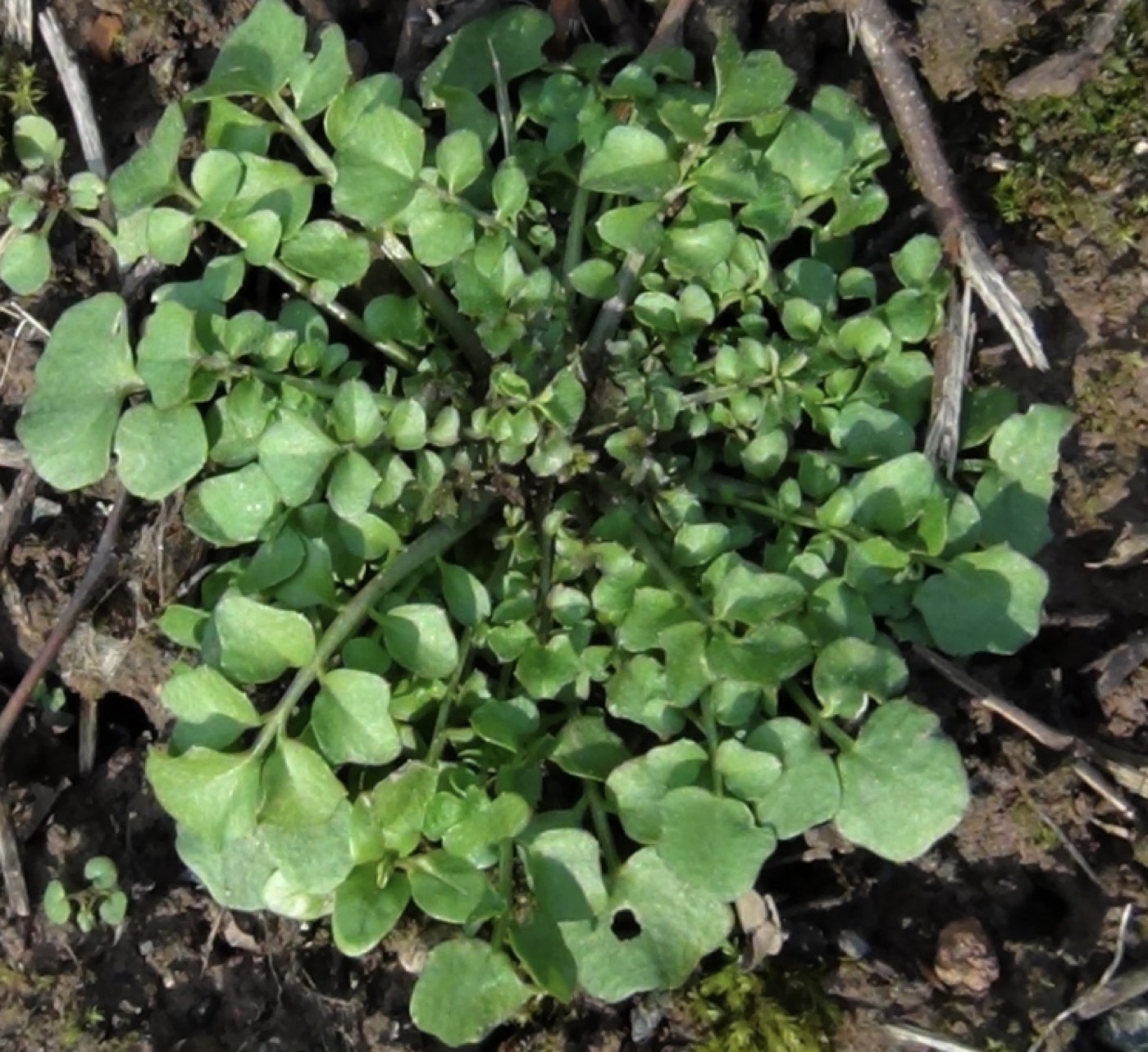
- Very small rosette-forming plant, rarely exceeding 20–30 cm when in flower. Often grows in masses covering bare soil in garden beds.
- Leaves are pinnately compound – divided into several pairs of small, rounded leaflets with a larger terminal leaflet. The leaflets are smooth to slightly hairy.
- Tiny white, four-petalled flowers (classic Brassicaceae cross-shape) at the top of slender, upright stems.
- Seed pods (siliques) are long, thin, and strap-like, held erect above the flowers. Touch them gently when mature – they spring open explosively.
- The whole plant has a mild, watercress-peppery taste when nibbled.
Lookalikes
Similar small Brassicaceae rosette with white flowers. Distinguished by its undivided (not pinnate) basal leaves and the very distinctive triangular/heart-shaped seed pods.
Australia has several native and naturalised Cardamine species, all edible with similar flavour. Leaf shape varies; identification to species is rarely necessary.
How to Forage
Simply pick whole rosettes or snip tops with scissors directly from garden beds or ground. No preparation needed – rinse and eat. Best harvested before the seed pods develop (to avoid explosive seed dispersal during picking). A handful makes a perfect pocket snack or instant garnish.
Recipe — Flick Weed Cress Salad with Avocado & Finger Lime
Ingredients: 3 large handfuls flick weed / hairy bittercress; 1 ripe avocado, sliced; 1 finger lime (or 1/4 regular lime), pulp only; 1 tbsp extra-virgin olive oil; flaky sea salt; optional toasted seeds (sesame, sunflower) for crunch. Method: Rinse flick weed and spin or pat dry. Arrange on a plate with sliced avocado. Dot finger lime pearls over the top (or squeeze juice from a regular lime). Drizzle olive oil, scatter flaky salt, and add toasted seeds if using. Eat immediately – a two-minute dish from garden to plate. Flick weed is also outstanding as a micro-green garnish on soups, sandwiches, and grain bowls – add a small pile at the last moment for a peppery, fresh burst.
Want more?
Join our newsletter for more recipes, foraging guides and upcoming events.