Dandelion
Taraxacum officinale
Also known as: Dandelion, Common Dandelion, Lion's Tooth, Blowball
The English name derives from the French 'dent de lion' (lion's tooth), describing the jagged leaf margins. The Latin 'officinale' means it was an official medicinal herb – listed in pharmacopoeias. In French it is known as 'pissenlit' (wet-the-bed) for its diuretic properties. One of the most widely distributed plants on earth, the dandelion is a perennial herb with a deep taproot growing in lawns, waste ground, coastal clifftops, and disturbed soils across temperate and cool Australia. Every part of the plant is edible and nutritious. It has a long history of use as food and medicine across Europe, Asia, and Indigenous cultures.
When to Forage
Year-round; best (most tender, least bitter) in spring and early autumn.
Cautions
Dandelion has a significant diuretic effect – those on diuretic medications should be cautious. It may interact with some antibiotics (quinolones) by reducing absorption. Latex in the stem may cause contact dermatitis in latex-sensitive individuals. Avoid during pregnancy in large (medicinal) doses.
Nutrition
Exceptional nutritional profile: extremely high in vitamin A (beta-carotene), vitamin K, vitamin C, folate, riboflavin, and vitamin E. Rich in minerals: calcium, iron, potassium, magnesium, copper, and manganese. Root contains prebiotic inulin. Leaves are one of the most micronutrient-dense wild greens available. Also contains taraxacin and taraxacerin (liver-supportive bitter compounds).
How to Identify
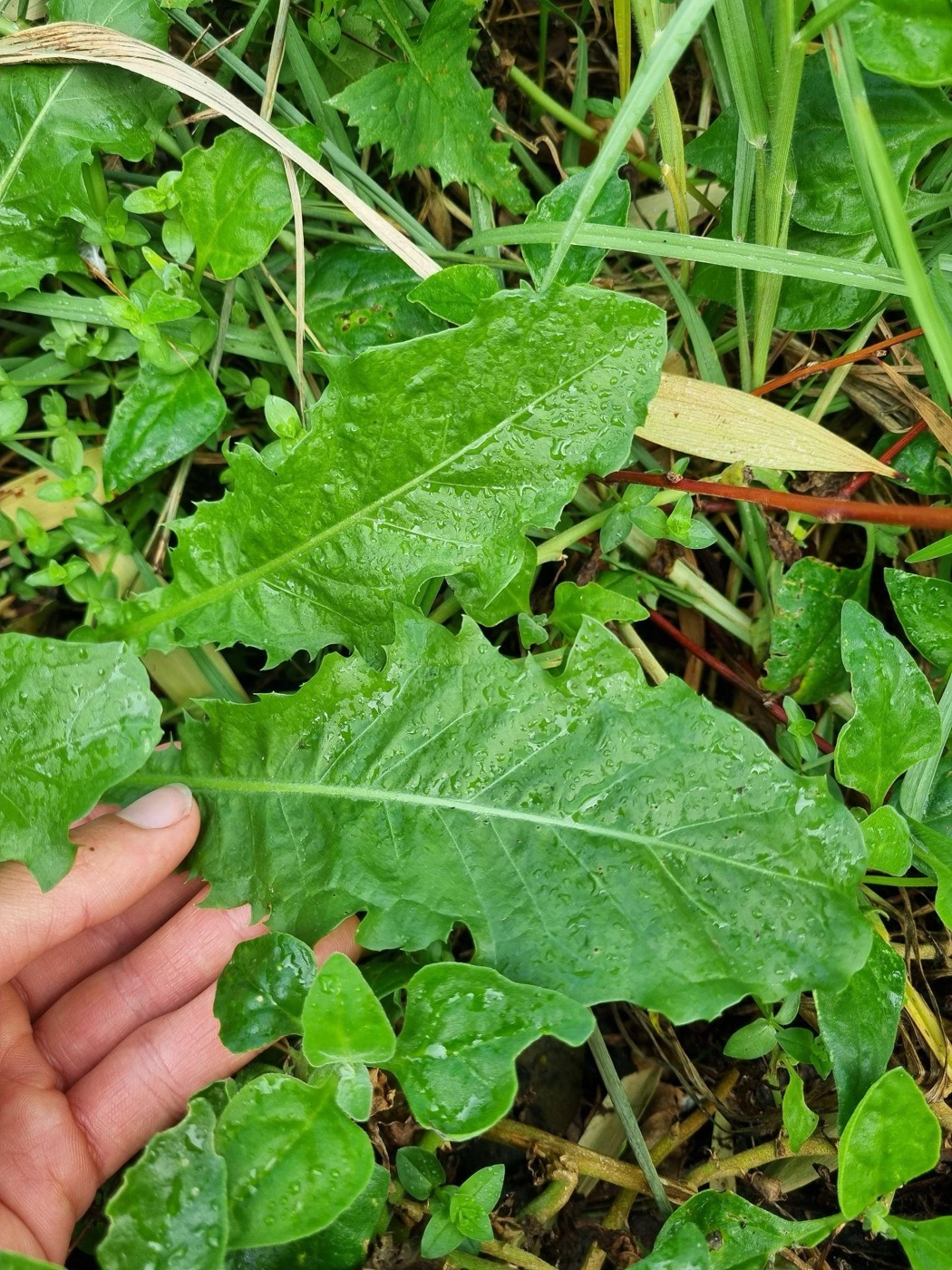
- Basal rosette of deeply lobed, toothed leaves with lobes pointing backward toward the base – the classic 'lion's tooth' shape.
- Single hollow flower stem (scape) bearing one bright yellow composite flower head, with hundreds of tiny ray florets.
- The entire plant exudes a white milky latex when cut.
- Seed head is the familiar globe of white, feathery parachutes, each carrying a single seed.
- Taproot is thick, brown, and deeply anchored.
Lookalikes
Very similar appearance but flower stems branch and bear multiple flower heads; leaves are rougher and more hairy. Completely edible, though slightly less palatable.
Blue/lavender flowers distinguish it immediately. Also edible.
Sow thistle grows upright with branching stems bearing multiple small flower heads, rather than dandelion's single flower on a leafless, unbranched scape. Its leaves clasp the stem with rounded, ear-like lobes, and it exudes a thinner milky sap. Fully edible.
A much smaller rosette with tiny white four-petalled flowers (not a single large yellow head) and distinctive triangular, purse-shaped seed pods. No milky latex. Easily told apart once flowering.
A tall, upright plant, not a ground-hugging rosette – dandelion never sends up a leafy flowering stem. Prickly lettuce leaves are deeply cut with a spiny midrib and orient edge-on to the sun (compass behaviour); its numerous small pale-yellow flowers are borne in a branching panicle rather than dandelion's single bloom per stem.
Also a tall, upright, stem-forming plant rather than a rosette, with broad leaves and copious, strong-smelling milky latex – readily distinguished from dandelion's single-flowered, leafless scape by its overall size and branching form alone.
How to Forage
Harvest young leaves from the centre of the rosette for salads – these are least bitter. Older outer leaves can be blanched and eaten as cooked greens. Flowers can be eaten raw or fried in batter. Dig the taproot in autumn or winter for roasting. Use a small trowel or dandelion fork to extract the root without disturbing surrounding plants.
Recipe — Dandelion Leaf and Warm Lentil Salad
Ingredients: 2 large handfuls young dandelion leaves; 1 cup cooked green or puy lentils (warm); 3 tbsp toasted walnuts; 1 tsp Dijon mustard; 2 tbsp red wine vinegar; 3 tbsp olive oil; 1 small shallot, finely diced; salt and pepper. Method: Wash dandelion leaves and tear into large pieces. Toast walnuts in a dry pan until fragrant; set aside. Whisk mustard, vinegar, shallot, olive oil, salt, and pepper into a warm dressing. Toss warm lentils with dandelion leaves – the heat will slightly wilt the leaves. Add dressing, top with toasted walnuts, and serve immediately. Inspo: dandelion root coffee, dandelion flower jelly, Pugliese dandelion crowns/hearts.
Want more?
Join our newsletter for more recipes, foraging guides and upcoming events.