Cobbler's Peg
Bidens pilosa
Also known as: Cobbler's Peg, Farmer's Friend, Beggar's Tick, Black-Jack
The name 'Cobbler's Peg' refers to the thin, awl-like seed that resembles a cobbler's tack or peg. 'Bidens' is Latin for 'two teeth', referring to the two prominent barbs on each seed that catch on clothing and animal fur. 'Pilosa' means 'hairy'. Cobbler's peg is a widespread, upright annual weed of disturbed ground, roadsides, garden edges, and coastal margins across much of Australia. Though an introduced species, it has naturalised broadly and is valued as an edible and medicinal plant in many cultures across Africa, Asia, and the Pacific. Young leaves have a pleasant, slightly bitter flavour.
When to Forage
Year-round in warm climates; most abundant in summer and autumn.
Cautions
Generally safe as a food plant in culinary quantities. Very large amounts may have mild anti-coagulant effects – exercise caution if on blood-thinning medication. Some individuals may experience contact dermatitis from the plant. Used medicinally in traditional systems; not recommended in large medicinal doses during pregnancy. Like many wild greens, it can accumulate heavy metals and other soil contaminants – avoid foraging from sites where this is a known issue, such as roadsides, industrial land, or former agricultural ground.
Nutrition
Young leaves contain beta-carotene, vitamin C, vitamin E, calcium, potassium, magnesium, and iron. Also contains flavonoids (quercetin, luteolin) and polyacetylenes with documented anti-inflammatory and antimicrobial properties. A useful wild green with a surprisingly strong micronutrient profile.
How to Identify
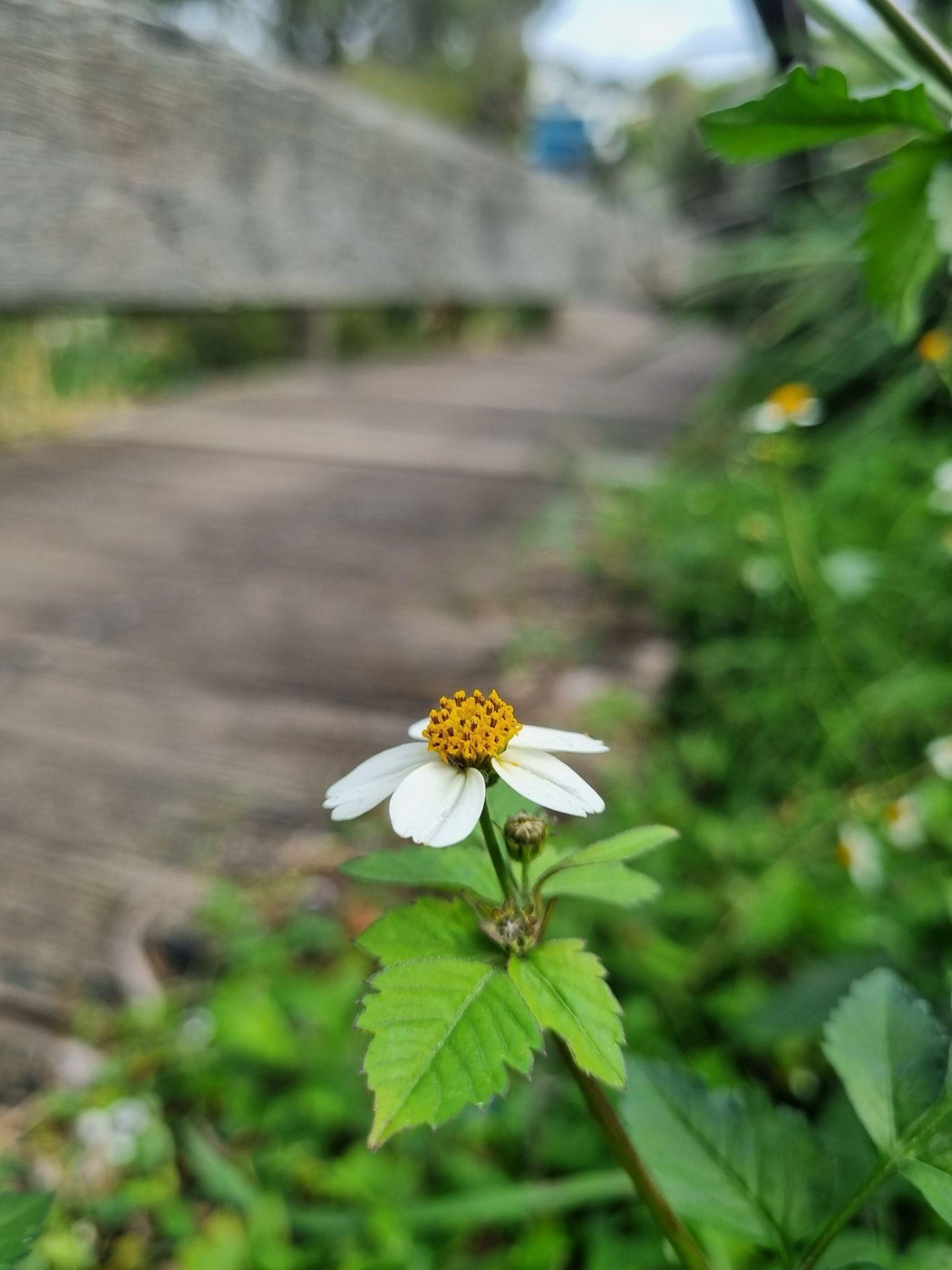
- Upright annual to about 1 m tall with opposite, pinnate leaves: usually three to five lobed or toothed leaflets per leaf, giving a fern-like appearance.
- Small daisy-like flowers: a yellow central disc surrounded by a few short white ray florets (sometimes absent entirely on some plants).
- Seeds are the giveaway: long, thin, brown-black needles, each with two or three backward-facing barbs that cling tenaciously to socks and fur.
- Stem is square or angled in cross-section.
Lookalikes
Other Bidens species are similarly edible; the key features (barbed seeds, lobed leaves, daisy flowers) are shared. Confusion with related species is generally safe.
In some areas ragweed may grow nearby. Ragweed has similar feathery leaves but produces inconspicuous greenish flowers (not white-rayed daisies) and is a major allergen. The barbed Bidens seeds are distinctive.
How to Forage
Harvest the top 5–10 cm of the plant, including the young leaf tips. Use scissors. Young growth before flowering is most tender and least bitter. Strip seeds carefully from clothing after foraging nearby – the barbs can be irritating. Blanching reduces bitterness.
Recipe — Sautéed Cobbler's Peg Greens with Garlic
Ingredients: 3 large handfuls young cobbler's peg tips; 3 cloves garlic, sliced; 2 tbsp olive oil; pinch of chilli flakes; salt; squeeze of lemon and/or finger lime. Method: Blanch the cobbler's peg greens in boiling salted water for 2 minutes to reduce bitterness, then drain, refresh in cold water, and squeeze out excess moisture. Heat olive oil in a pan over medium heat, add the garlic and chilli, and cook 1 minute until fragrant. Add the greens and toss well, season with salt, and cook for 2–3 minutes. Squeeze over lemon and serve as a side dish or on toast.
Want more?
Join our newsletter for more recipes, foraging guides and upcoming events.