Chickweed
Stellaria media
Also known as: Chickweed, Common Chickweed, Starweed
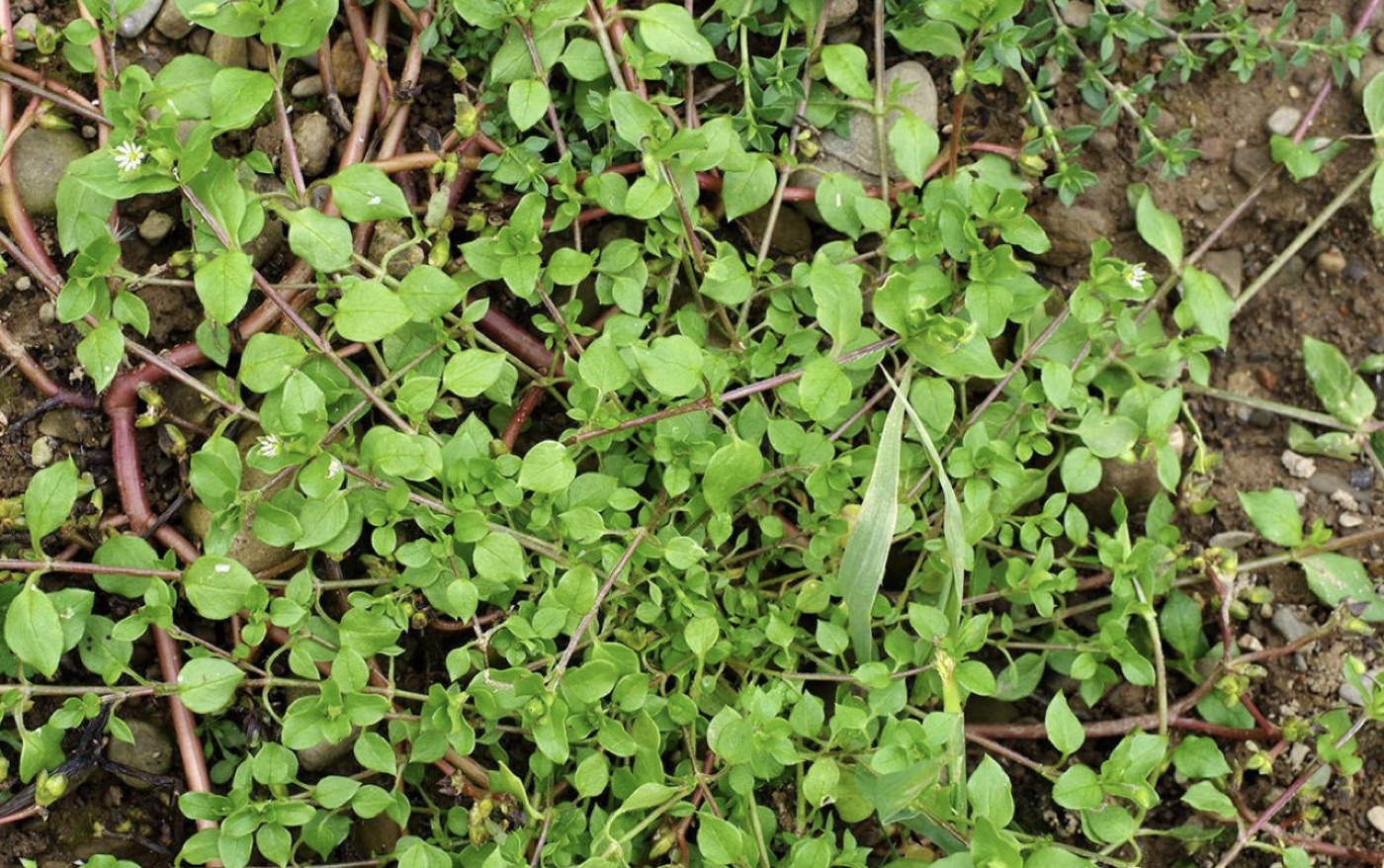
'Stellaria' comes from the Latin 'stella' (star), referring to the white star-shaped flowers. 'Media' means 'middle' or 'intermediate'. The common name 'chickweed' is centuries old – chickens and small birds are famously fond of it – and 'starweed' similarly references the flower form. One of the most widespread edible weeds on earth, chickweed is a low-growing annual or winter annual that thrives in cool, moist, disturbed ground: garden beds, roadsides, coastal scrub margins, and shaded sandy areas. In Australia it is most vigorous in autumn, winter, and spring, forming dense, sprawling mats of soft, oval-tipped stems and leaves.
When to Forage
Best in cool months: April through September. May die back in high summer.
Cautions
Chickweed is very safe and well-tolerated by most people.
Nutrition
Rich in vitamin C, vitamin A (as beta-carotene), vitamin D, B vitamins including riboflavin and niacin, and vitamin K; minerals including iron, calcium, magnesium, potassium, phosphorus, and zinc. Contains saponins and flavonoids. A remarkably nutrient-dense salad green, historically used to prevent and treat scurvy.
How to Identify
- Stems are very slender, bright green, and notably hairy along a single line of fine hairs that alternates sides between each pair of leaves – this single line of hairs is a classic identification feature.
- Leaves are oval, smooth, bright green, and grow in opposite pairs along the stem; lower leaves may have a small stalk, upper leaves are sessile.
- Flowers are tiny, white, and star-like with five deeply notched petals that appear as ten. They sit on slender stalks.
- The plant is soft, cool, and almost watery to the touch.
Lookalikes
Grows in similar habitats. Has opposite, oval, unstalked leaves without the hairy stem-line. Flowers are orange-red to pink, not white. Ingestion can cause nausea, vomiting, and skin irritation. Learn to distinguish the hairy stem-line of true chickweed.
Very similar but leaves and stems are covered all over in soft hairs (not a single line). Generally non-toxic, though less palatable.
How to Forage
Use scissors or your fingers to snip the top 5–10 cm of fresh green growth. The tender tips are best; older, yellowing stems are fibrous. Chickweed yields abundantly – you can harvest generous handfuls from a healthy patch without harming the colony. Rinse well before eating.
Recipe — Chickweed, Avocado, and Caper Salad
Ingredients: 3 large handfuls fresh chickweed tips; 1 large avocado, sliced; 100 g marinated tofu, cubed; 1 tbsp capers; 2 tbsp olive oil; 1 tbsp apple cider vinegar; salt and pepper; pinch of chilli flakes. Method: Wash the chickweed thoroughly in cold water and spin dry. Arrange the chickweed on a plate, top with sliced avocado and cubed marinated tofu, and scatter the capers over. Whisk olive oil, vinegar, salt, pepper, and chilli flakes, then drizzle over the salad. Serve immediately – chickweed wilts quickly once dressed. Inspo: chickweed pesto, chickweed spanakopita.
Want more?
Join our newsletter for more recipes, foraging guides and upcoming events.