Blackberry Nightshade
Solanum nigrum agg.
Also known as: Blackberry Nightshade, Black Nightshade, Garden Nightshade
'Solanum' derives from the Latin 'solari' (to comfort or soothe), referring to the plant's traditional narcotic properties. 'Nigrum' means 'black,' describing the ripe berries. The common name 'nightshade' is applied to many members of the Solanaceae family; 'black' or 'blackberry' distinguishes this species from the more infamous deadly nightshade (Atropa belladonna), to which it is related but far less toxic. Blackberry nightshade is a common annual or short-lived perennial weed of gardens, roadsides, disturbed ground, and coastal margins throughout Australia. It is a member of the large and important Solanaceae family – relatives include tomato, potato, capsicum, and eggplant. The plant produces small white flowers and clusters of small, round berries that ripen from green to black (rarely yellow). Its edibility is complex and requires careful attention to ripeness – see cautions. This entry is included to ensure foragers can identify and correctly assess this plant, which they will inevitably encounter.
When to Forage
Berries ripen summer through autumn. Leaves are present year-round.
Cautions
IMPORTANT: Green and unripe berries contain significant levels of solanine – a toxic glycoalkaloid that causes severe gastrointestinal distress (nausea, vomiting, diarrhoea) and in large quantities can affect the nervous system. Only fully ripe (completely black) berries are considered edible. The leaves contain solanine and are not recommended for eating. Do not eat any berries that are not fully, uniformly black. Children are particularly at risk and should be taught to avoid unripe berries.
Nutrition
Ripe black berries contain vitamins A and C, iron, calcium, and antioxidant anthocyanins. They have been eaten as a food by Indigenous Australians and many cultures globally after careful cooking. Nutritional value is moderate.
How to Identify
- Upright or sprawling annual, 30–80 cm tall, with soft, ovate to diamond-shaped leaves. Stems are round (not square or angled), green, and may have fine hairs.
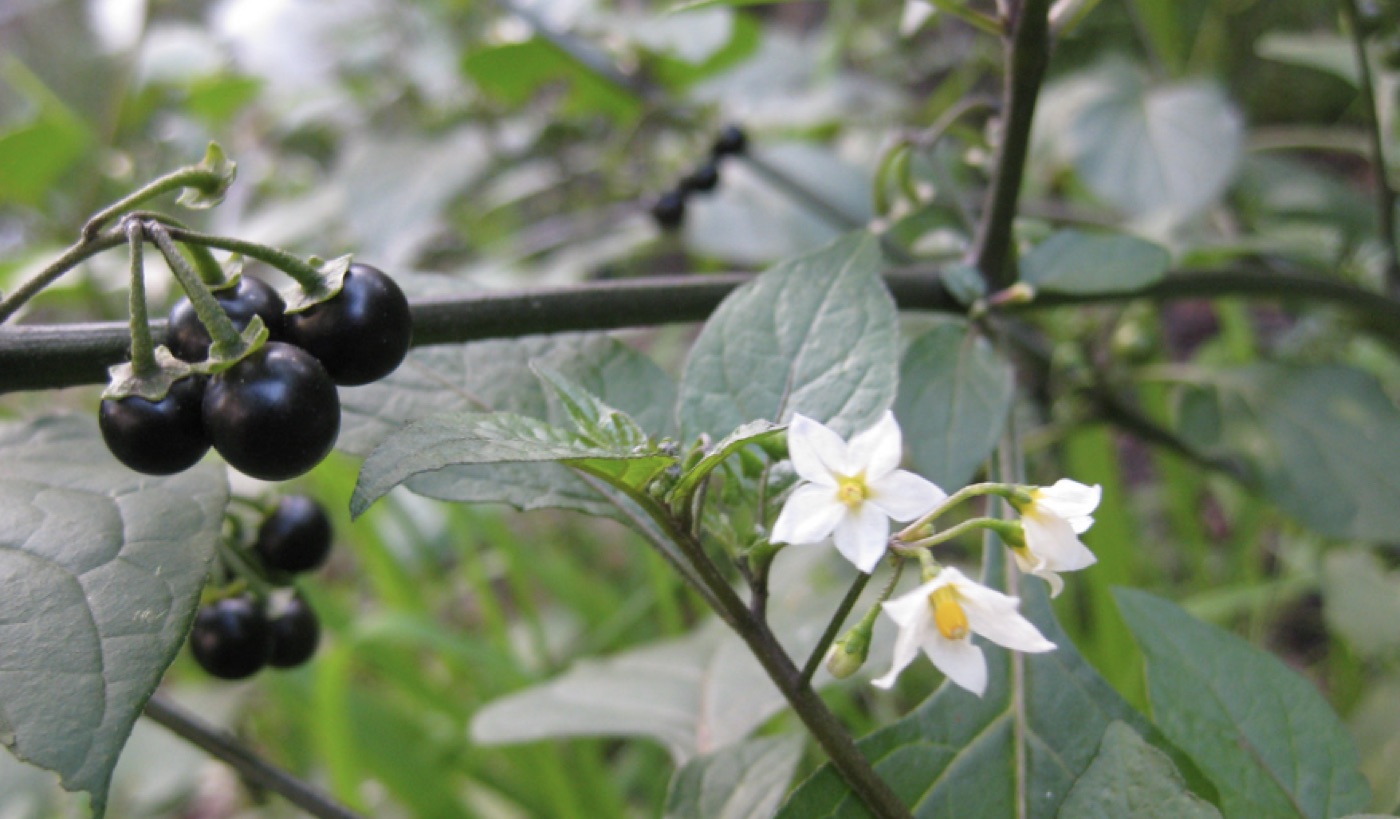
- Flowers are white, five-petalled, star-shaped (classic Solanaceae form) with a prominent yellow anther cone in the centre.
- Berries are round, 5–8 mm diameter, borne in small clusters. They ripen progressively from green to fully black. Unripe berries are dull green; ripe berries are glossy black.
- Leaves have an irregular wavy margin, are slightly hairy, and often have a slightly unpleasant smell when crushed.
- The anther cone (yellow cluster of anthers) is a consistent Solanum feature.
Lookalikes
A much larger plant, rarely found in Australia. Berries are larger (1–2 cm), single (not in clusters), and the plant has bell-shaped flowers (not star-shaped). Not commonly encountered in the wild in Australia, but worth knowing.
Much larger plant with deeply lobed purple flowers and larger orange to yellow fruits when ripe. Both species are recognised edibles only when fully ripe.
How to Forage
Harvest only fully ripe, uniformly glossy black berries. Discard any that are green, mottled, or not fully black. Many foragers and wild food educators recommend cooking the ripe berries before consumption (traditional use in many cultures was always cooked). This is a plant where the watchword is caution – if in doubt, leave it out.
Recipe — Ripe Blackberry Nightshade Jam (Traditional use – with caution)
Ingredients: 1 cup fully ripe (glossy black) blackberry nightshade berries; 1/2 cup sugar; juice of 1/2 lemon; optional pinch of cinnamon. Method: Check every berry – discard any that are not fully, uniformly black. Combine berries, sugar, and lemon juice in a small saucepan. Bring to a boil, stirring. Simmer for 15–20 minutes, stirring frequently, until thickened. Skim any foam. Pour into a sterilised jar. Store refrigerated. Use sparingly – a spoonful on toast or as a condiment.
Want more?
Join our newsletter for more recipes, foraging guides and upcoming events.