Banksia
Banksia spp.
Also known as: Banksia, Australian Honeysuckle
Named after the botanist Sir Joseph Banks, who collected specimens during Captain Cook's 1770 voyage along the Australian coast. The common name 'honeysuckle' reflects the nectar-rich flower cones. Banksia is a large genus of over 170 species native to Australia, growing from coastal heathland and dunes to dry sclerophyll forests. Most species flower in autumn and winter, producing iconic cylindrical or globular flower spikes packed with hundreds of individual flowers, each holding a droplet of sweet nectar. Coastal species such as B. integrifolia (Coast Banksia) thrive in sandy, salt-tolerant conditions.
When to Forage
Flowers available primarily in autumn and winter, though some species bloom year-round.
Cautions
The nectar is generally safe in small quantities. Avoid drinking infused nectar water that has been left standing, as fermentation can occur rapidly. Diabetics should note the high sugar content. Those with bee or pollen allergies should exercise caution around the flowers.
Nutrition
The nectar is rich in simple sugars (fructose and glucose) and contains trace amounts of amino acids, potassium, and various flavonoid antioxidants. It is not nutritionally dense, but provides quick energy and a pleasant sweetness – note that you will also likely be consuming a number of tiny insects in the process, which form a valuable protein supplement.
How to Identify
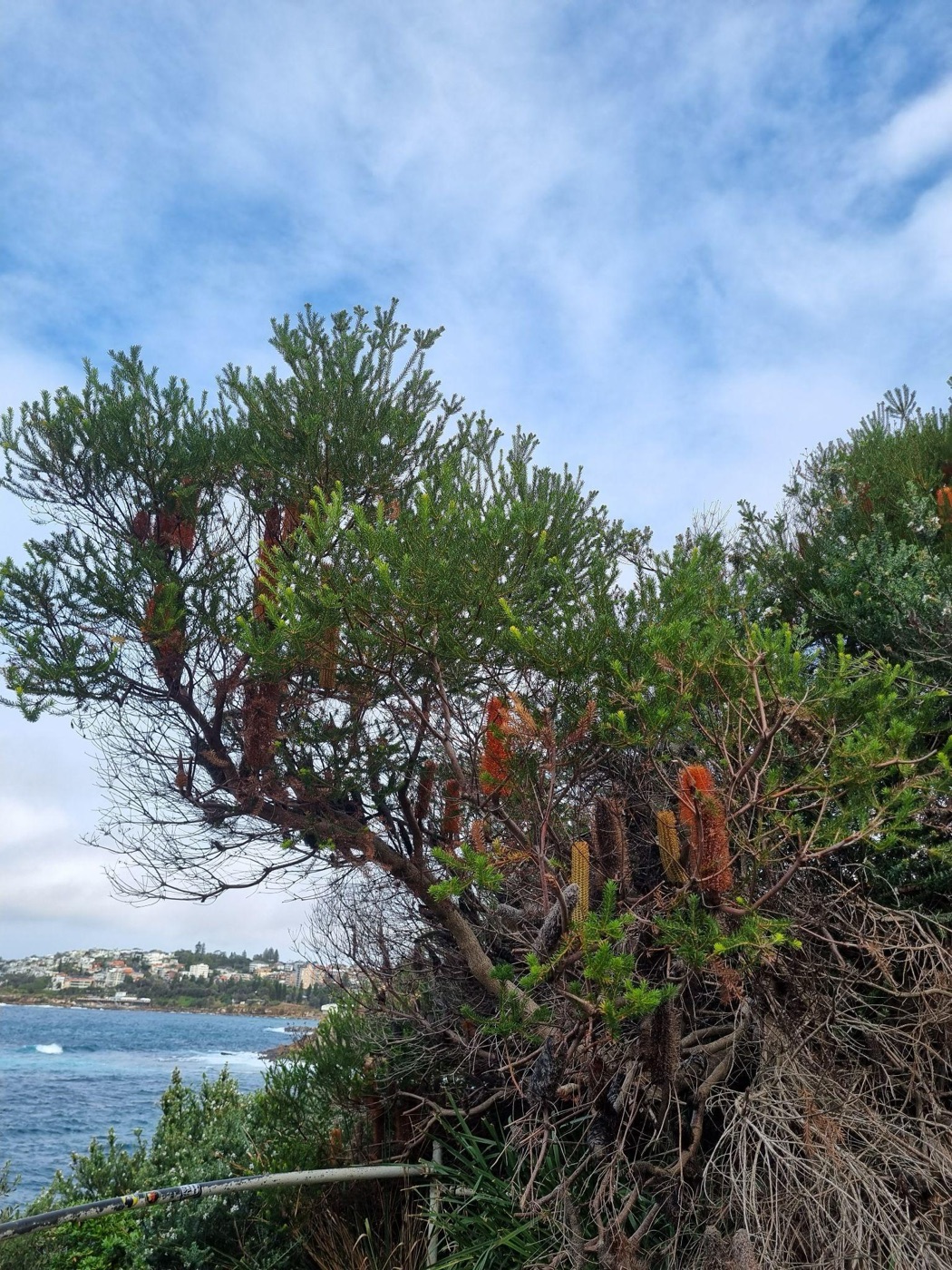
- Look for the iconic elongated or rounded flower cone – a dense spike of tightly packed, tubular flowers, typically cream, yellow, orange, or red.
- Leaves are leathery, dark green above and often silver-white below, with characteristic saw-toothed margins in many species.
- Woody seed follicles persist on branches long after flowering.
- Coast Banksia (B. integrifolia) has smooth, oblong leaves and cream-coloured flower spikes; very common along south-eastern Australian shores.
Lookalikes
Grevillea flowers are superficially similar and also edible. Distinguished by their spider-like or toothbrush flower clusters and much finer foliage. Not dangerous.
Callistemon flowers are also similar, though they belong to a completely different plant family. Callistemon flower cones are smaller, softer, and shed easily; unlike the banksia, leaves grow out of the ends of the flower cones, and the seed pods are smaller, button-like structures.
A closely related genus with a similar appearance but generally producing smaller, harder flower clusters and sharp-tipped leaves. Some species have edible nectar, others do not – avoid unknown hakea species.
How to Forage
Gently shake or tilt a fresh flower spike over a bowl or directly into your mouth. You can also dip the flower spike in water to make a sweet infusion – a technique traditionally used by many Aboriginal peoples. Harvest only fully open cones; do not pick immature flower spikes. Take no more than a small number of cones from any one plant.
Recipe — Banksia Nectar Drink
Ingredients: 2–3 fresh banksia flower cones; 500 ml hot water; a squeeze of finger lime or lemon juice. Method: Place the fresh flower cones in a bowl or wide jug. Pour hot water over the cones and gently swirl or press to release the nectar. Allow to infuse for 5–10 minutes. Strain into cups, add a squeeze of finger lime, and serve immediately.
Want more?
Join our newsletter for more recipes, foraging guides and upcoming events.